Origins of the Arabs – Lineage, Tribes, and Early History

1. Who Are the Arabs? A Historical Definition

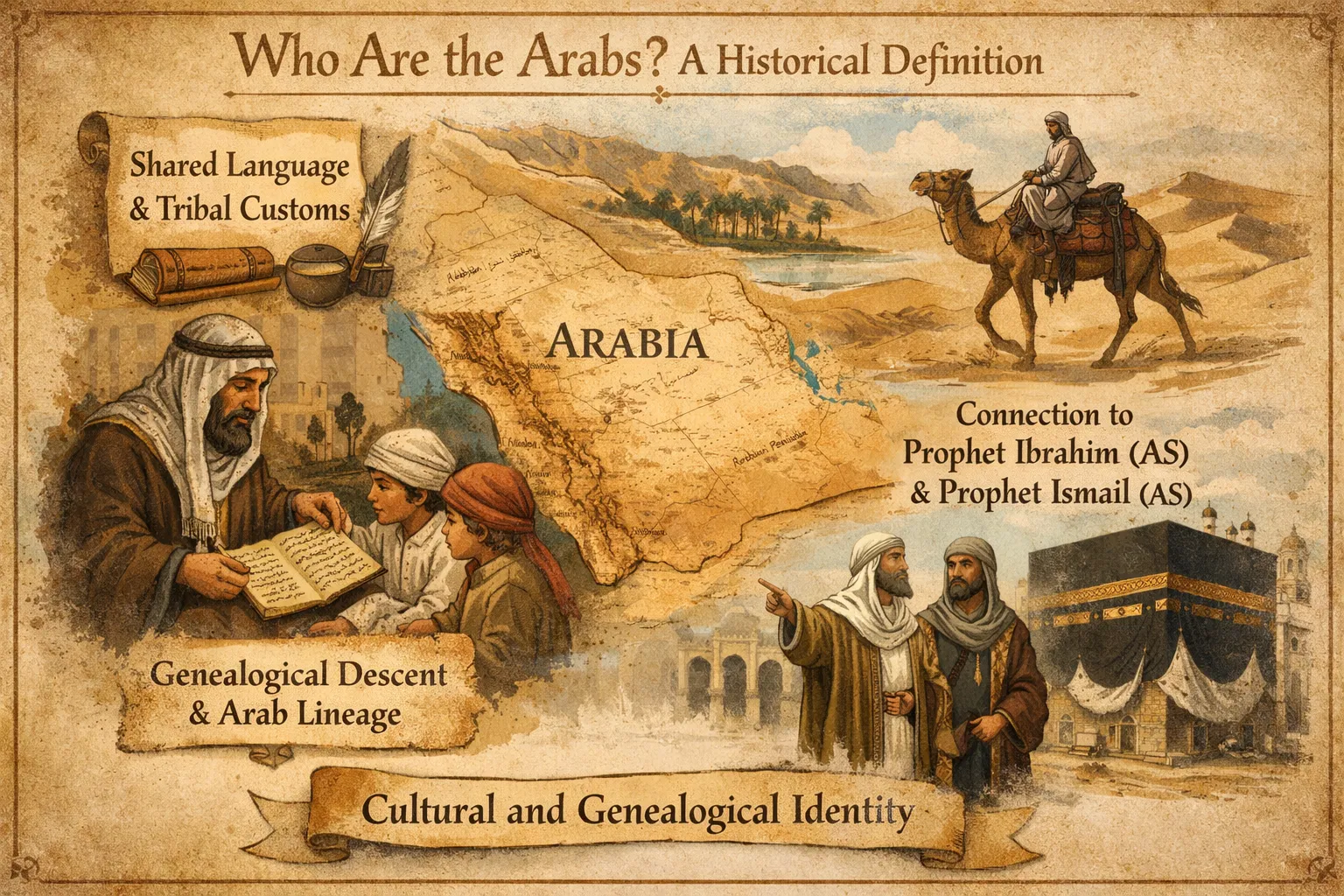
The Arab people emerged in the heart of the Arabian Peninsula, shaped by geography, tribal life, and shared ancestry. Long before the mission of Prophet Muhammad ﷺ, Arab identity developed through lineage, language, and migration, forming a distinct civilization.

Within the broader story of Before Islam and Arabia and the Arabs, this topic explains how Arab tribes traced their roots, how they spread across Arabia, and how their history connects to the legacy of Prophet Ibrahim (AS) and Prophet Ismail (AS).

In early historical sources, the term “Arabs” referred to peoples living in and around the Arabian Peninsula, especially those connected by language, lineage, and tribal customs. It was not originally a racial label but a cultural and genealogical identity.

Arab historians later explained Arab identity through descent and language. A person was considered Arab if they belonged to recognized Arab tribes and spoke early Arabic dialects, even if their ancestors had migrated from other regions.

Some classical definitions emphasized genealogy, while others focused on Arabic as a living language passed through generations. Over time, both elements merged to form a shared Arab identity.

In Islamic tradition, Arab lineage is closely tied to the family of Prophet Ibrahim (AS) through his son Prophet Ismail (AS), especially among the northern Arab tribes. This connection gave Arab ancestry a religious and historical significance that continued into the Islamic era.
2. The Geographic Roots of Arabia

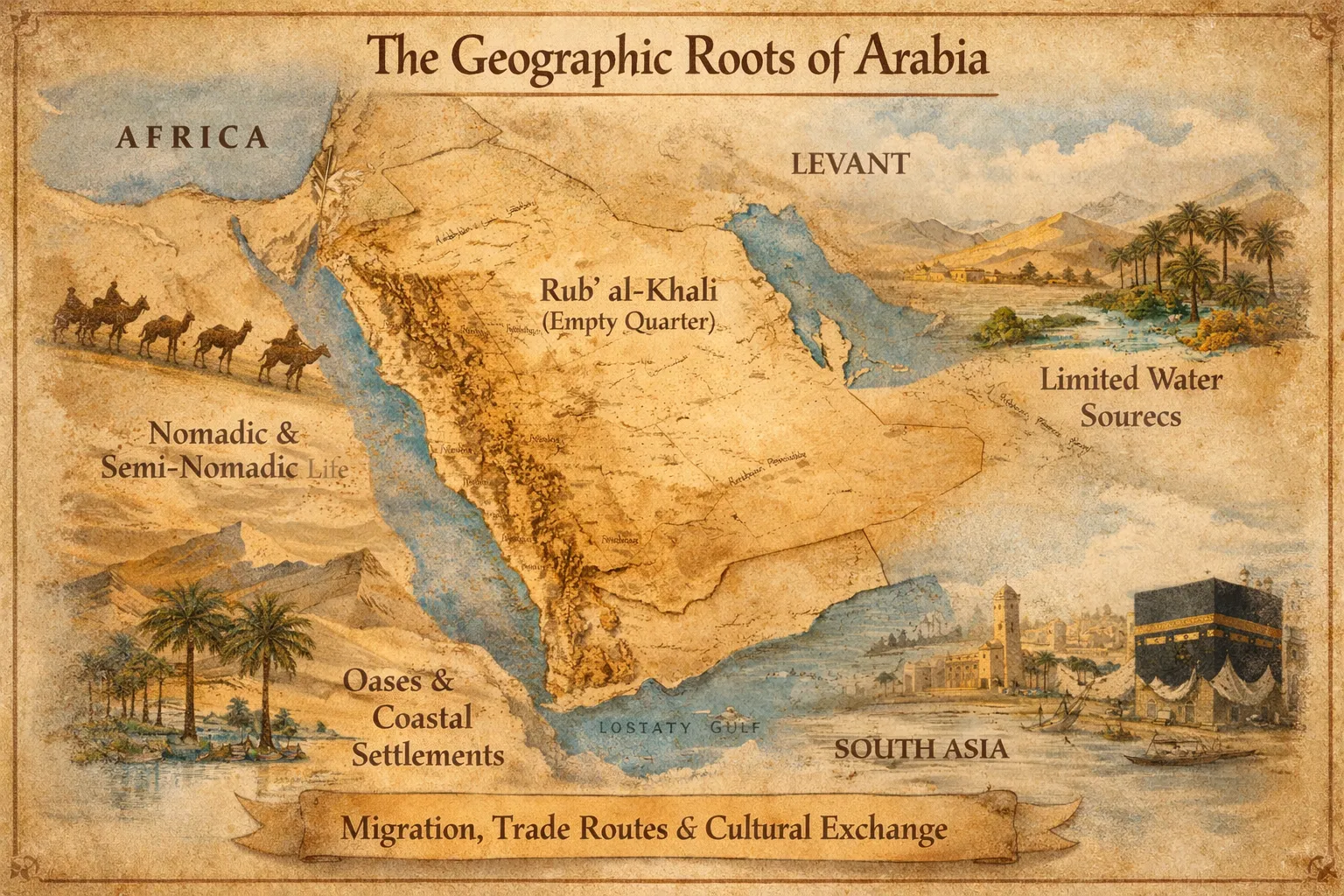
The origins of the Arabs are closely tied to the Arabian Peninsula, a vast region defined by deserts, mountains, and limited water sources. This geography shaped how early Arab communities lived, moved, and organized themselves.

Large deserts such as the Rubʿ al-Khali (Empty Quarter) made permanent settlement difficult. As a result, many Arabs adopted nomadic or semi-nomadic lifestyles, moving with seasons in search of water and pasture.

At the same time, certain areas supported stable life. Oases, valleys, and coastal zones allowed farming, trade, and long-term settlement. These locations became early centers of Arab population and influence.

Because Arabia sat between Africa, the Levant, and South Asia, it also served as a natural crossroads. This position encouraged migration, trade routes, and cultural exchange, all of which played a role in shaping early Arab identity.

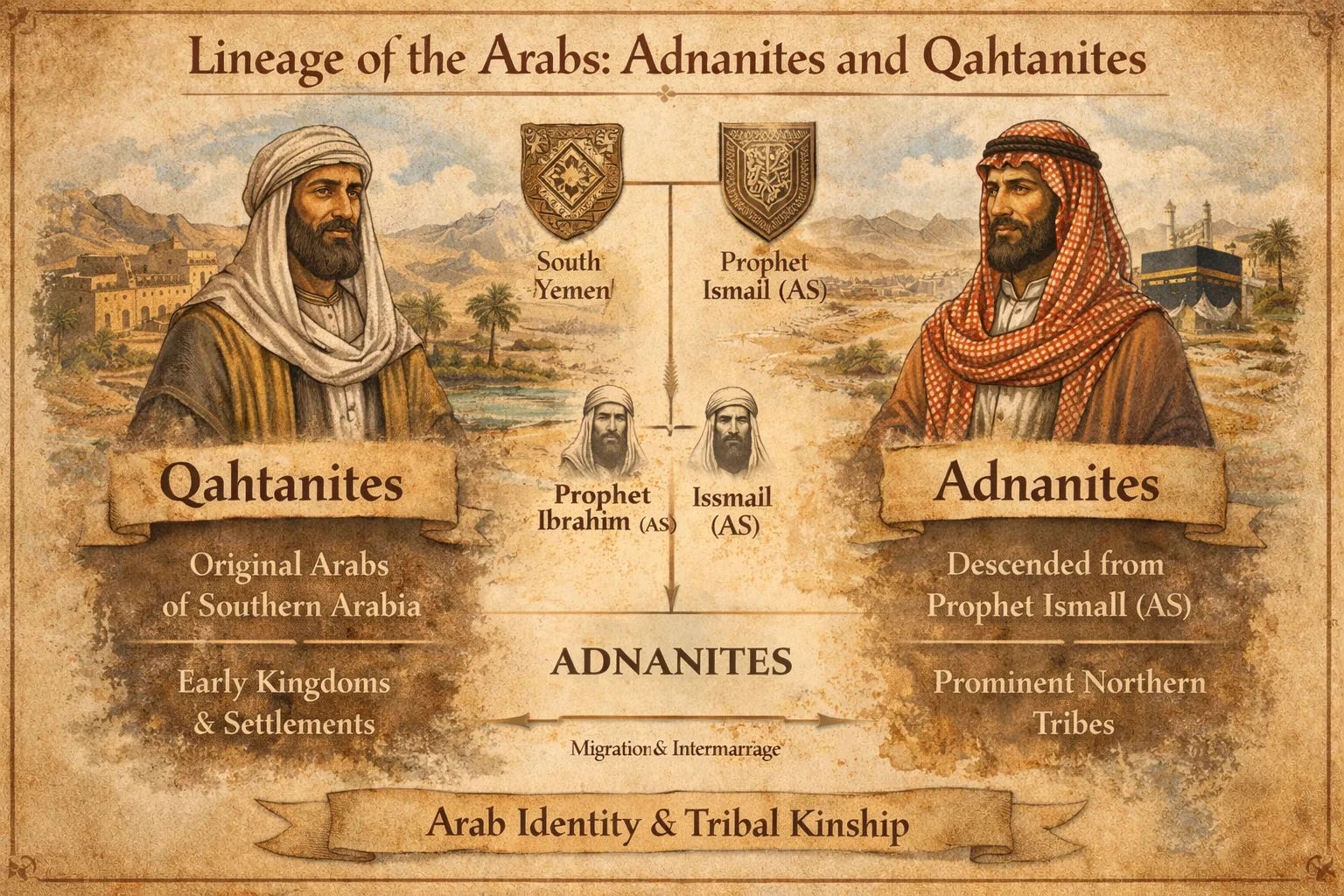
3. Lineage of the Arabs: Adnanites and Qahtanites

Arab historians traditionally divided Arab ancestry into two main lineage groups, based on genealogy and region. This system helped preserve tribal identity and clarified relationships between clans.

The first group is the Qahtanites, associated with southern Arabia, especially Yemen. They are considered the original Arabs, with long-established settlements, agriculture, and early kingdoms. Many famous southern tribes traced their roots to this lineage.

The second group is the Adnanites, linked to northern and central Arabia. Their ancestry is traced through Prophet Ismail (AS), the son of Prophet Ibrahim (AS). From this line came several well-known tribes, including Quraysh, the tribe of Prophet Muhammad ﷺ.

Over time, migration and intermarriage blurred strict boundaries, but this Adnanite–Qahtanite framework remained central to how Arabs understood origin, honor, and kinship before Islam.

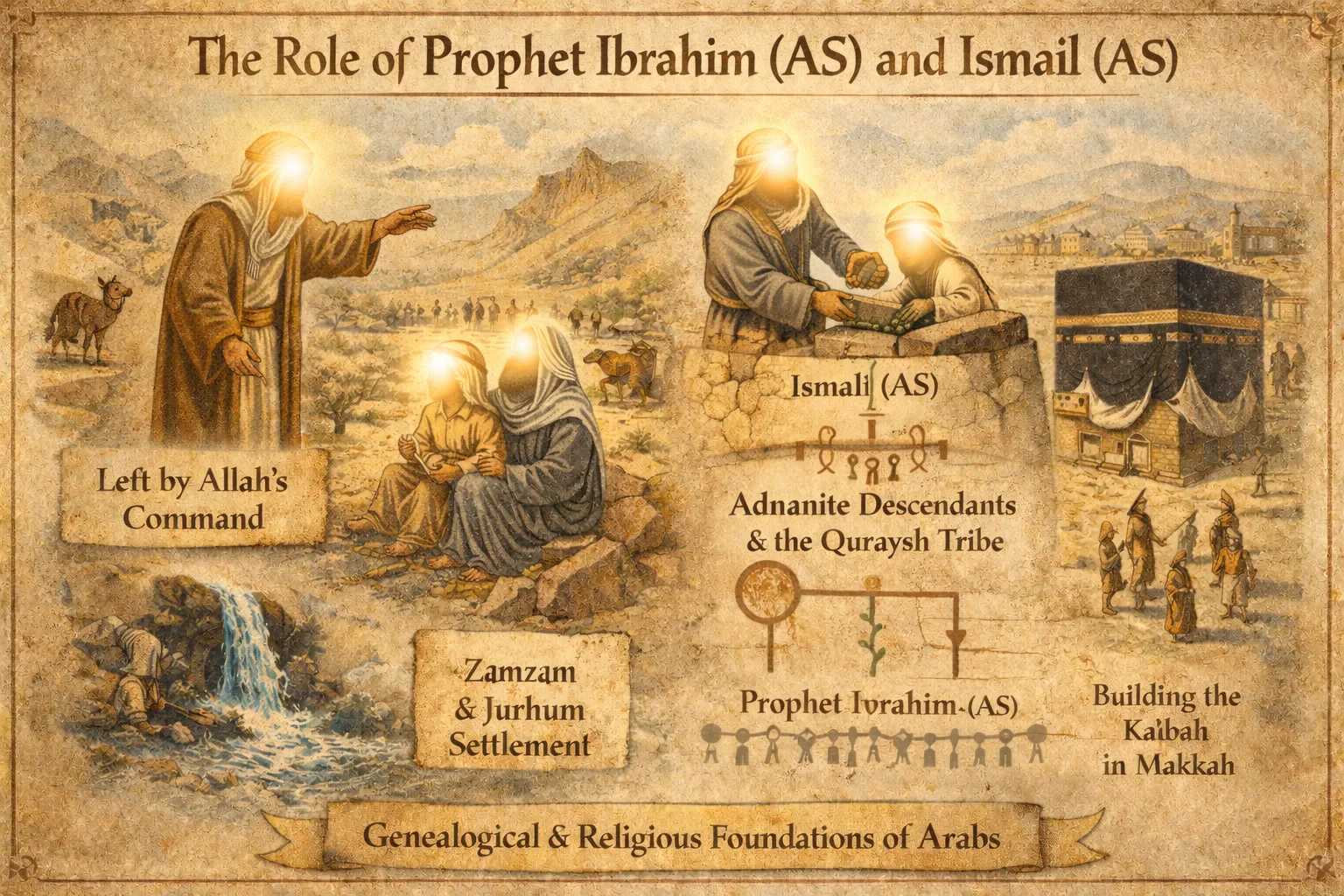
4. The Role of Prophet Ibrahim (AS) and Ismail (AS)

In Islamic history, the story of Arab origins is inseparable from Prophet Ibrahim (AS) and his son Prophet Ismail (AS). Their journey to Makkah laid a religious and genealogical foundation for many Arab tribes.

According to authentic Islamic sources, Ibrahim (AS) left Ismail (AS) and Hajar (RA) in the barren valley of Makkah by Allah’s command. The emergence of Zamzam, followed by the settlement of the Jurhum tribe, transformed the area into a permanent center of life.

Ismail (AS) grew up among the Arabs, learned pure Arabic, and married into local tribes. His descendants became known as the Adnanites, from whom many northern Arab tribes emerged.

This lineage later produced Quraysh, the tribe of Prophet Muhammad ﷺ, giving Arab ancestry a direct link to prophethood, worship, and the Kaʿbah long before Islam.

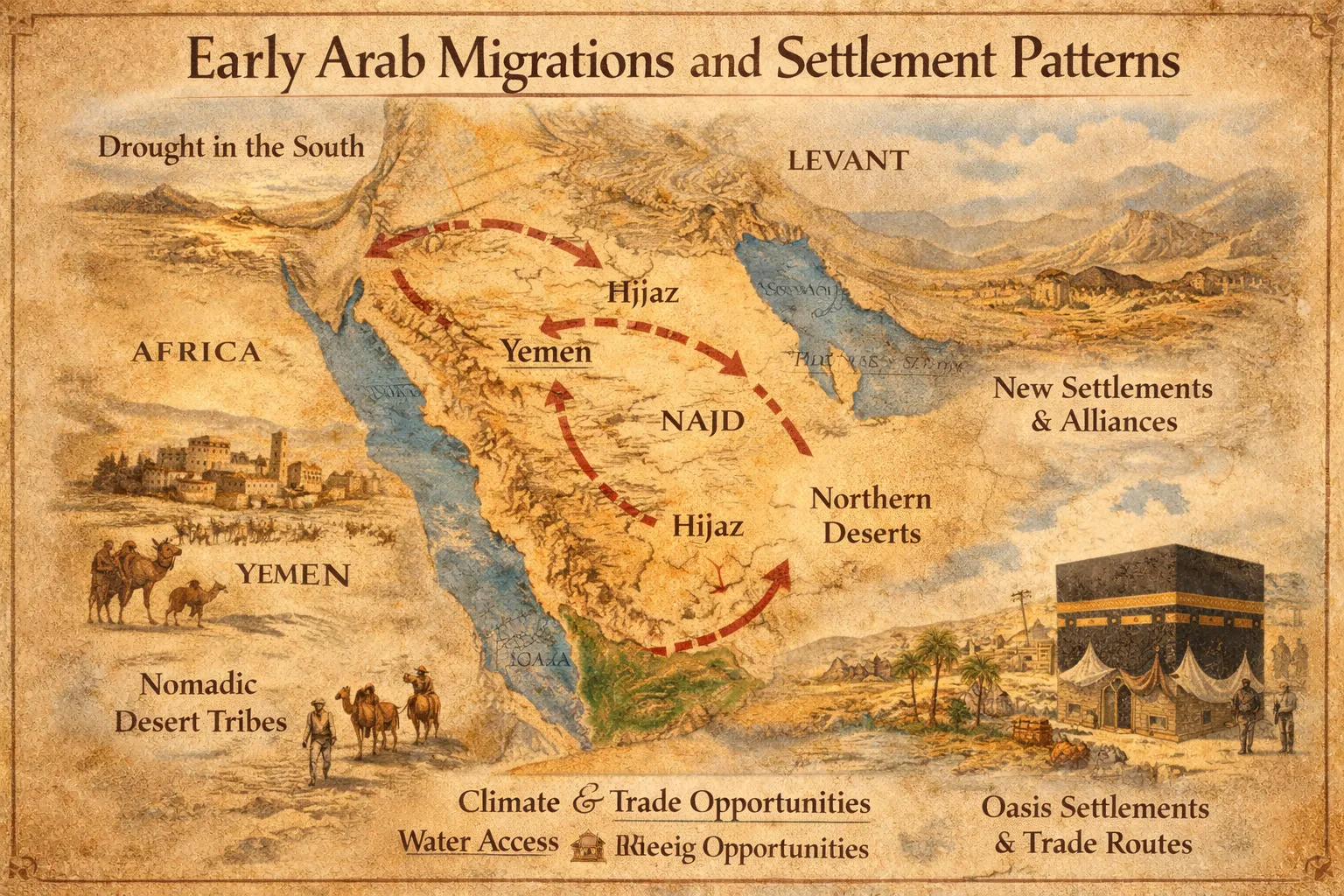
5. Early Arab Migrations and Settlement Patterns

Arab history before Islam was shaped by continuous migration driven by climate, water access, and trade opportunities. Tribes rarely stayed fixed for generations unless the land could support long-term life.

Periods of drought in southern Arabia, especially in regions like Yemen, pushed many tribes northward. These movements spread Arab populations across Hijaz, Najd, and the northern deserts, creating new settlements and alliances.

Some groups remained nomadic, moving with livestock between seasonal pastures. Others settled near oases and trade routes, where farming and commerce were possible. Over time, this led to a mix of desert tribes and town-based communities.

This pattern of migration explains why Arab society became tribally interconnected, with shared ancestry but diverse lifestyles. It also prepared Arabia for becoming a network of connected regions, rather than isolated pockets.

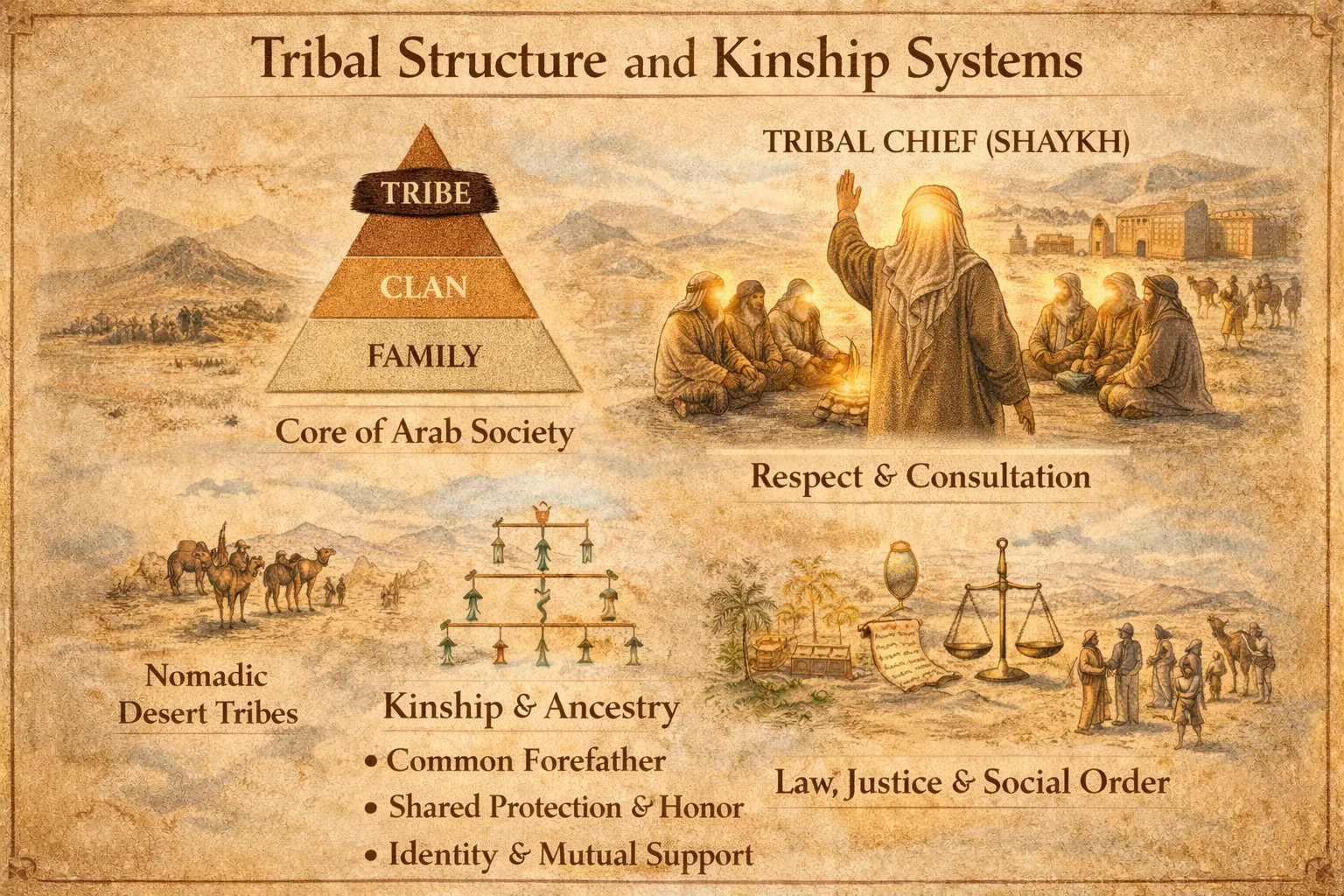
6. Tribal Structure and Kinship Systems

Arab society before Islam was organized around the tribe, which served as the core social, political, and security unit. Loyalty to one’s tribe was essential for survival in the harsh environment of Arabia.

Each tribe was built on kinship and ancestry, tracing descent through a common forefather. This created strong bonds of mutual support, where protection, honor, and responsibility were shared among members.

Leadership usually rested with a tribal chief (shaykh), chosen for wisdom, age, and respect rather than absolute power. Decisions were often made through consultation, reflecting collective values rather than centralized rule.

Because there was no single state authority, tribal systems provided law, justice, and social order. This structure deeply influenced Arab identity and later shaped how Islam addressed unity, justice, and brotherhood.

7. Language and the Rise of Classical Arabic

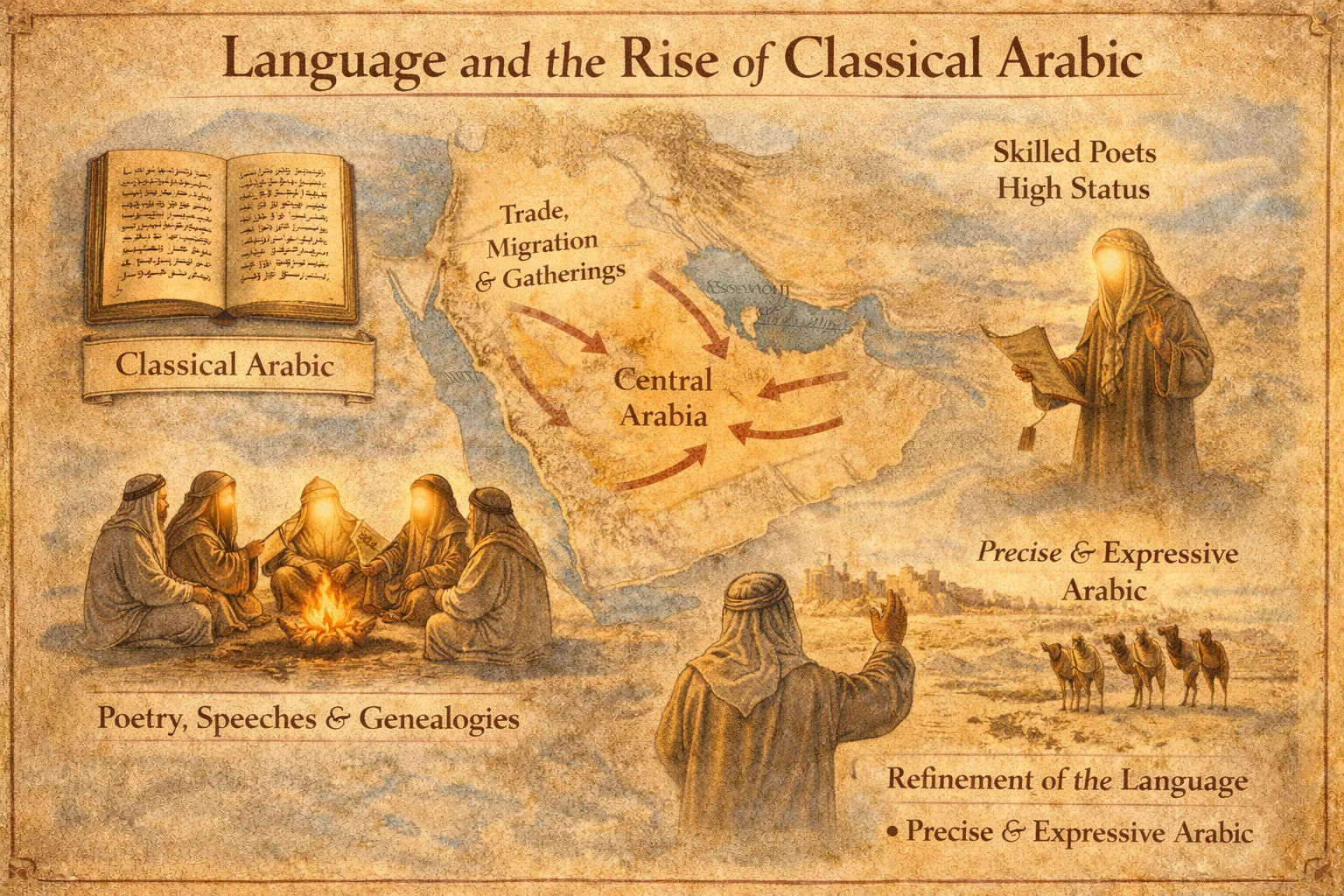
Language played a central role in shaping Arab identity long before Islam. Arabic developed as a shared means of communication among tribes, even though dialects varied from region to region.

In desert societies, oral tradition was vital. Poetry, speeches, and genealogies were memorized and passed down, preserving history, values, and tribal honor without written records. Skilled poets held high status because words carried social power.

Over time, interaction between tribes—through trade, migration, and gatherings—helped refine the language. This process gradually produced a clearer and more structured form of Arabic, especially in central Arabia.

By the time of Prophet Muhammad ﷺ, Arabic had become a precise and expressive language, capable of conveying deep meaning. This linguistic maturity later allowed the Qur’an to be understood, memorized, and preserved across generations.

8. Northern and Southern Arab Distinctions


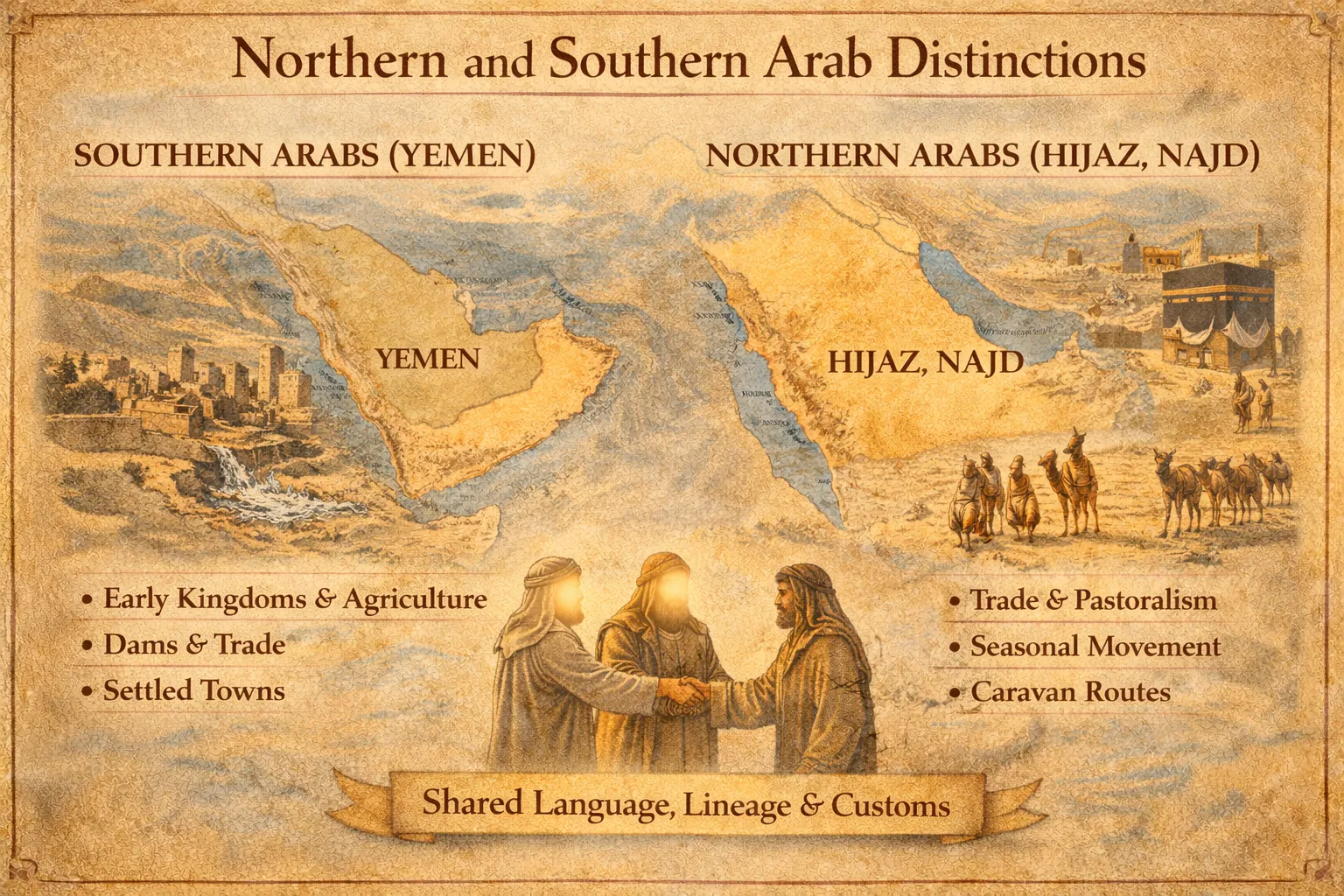
Before Islam, Arabs were often described through regional distinctions, shaped by environment, economy, and lineage rather than rigid borders. The most common division was between southern and northern Arab groups.

Southern Arabs were centered in areas like Yemen, where fertile land supported agriculture, dams, and early kingdoms. Their societies were more settled, with established towns, trade networks, and long political traditions.

Northern Arabs lived mainly in Hijaz, Najd, and surrounding deserts. Life there relied on trade, pastoralism, and seasonal movement. Cities such as Makkah grew important because they connected caravan routes rather than farming zones.

Despite these differences, shared language, ancestry, and customs kept Arabs connected. Over generations, migration and intermarriage softened divisions, preparing the region for a broader sense of unity with the coming of Islam.