Byzantine Empire Before Islam | Political World Context

1. Origins of the Eastern Roman State

Before the rise of Islam, the world was dominated by large imperial powers that shaped politics, religion, and trade. One of the most influential was the Byzantine Empire, also known as the Eastern Roman Empire.

This empire played a central role in the political landscape of the world during the late 6th and early 7th centuries. Its long rivalry with Persia, strong Christian identity, and control over key regions deeply affected the environment into which Islam later emerged.

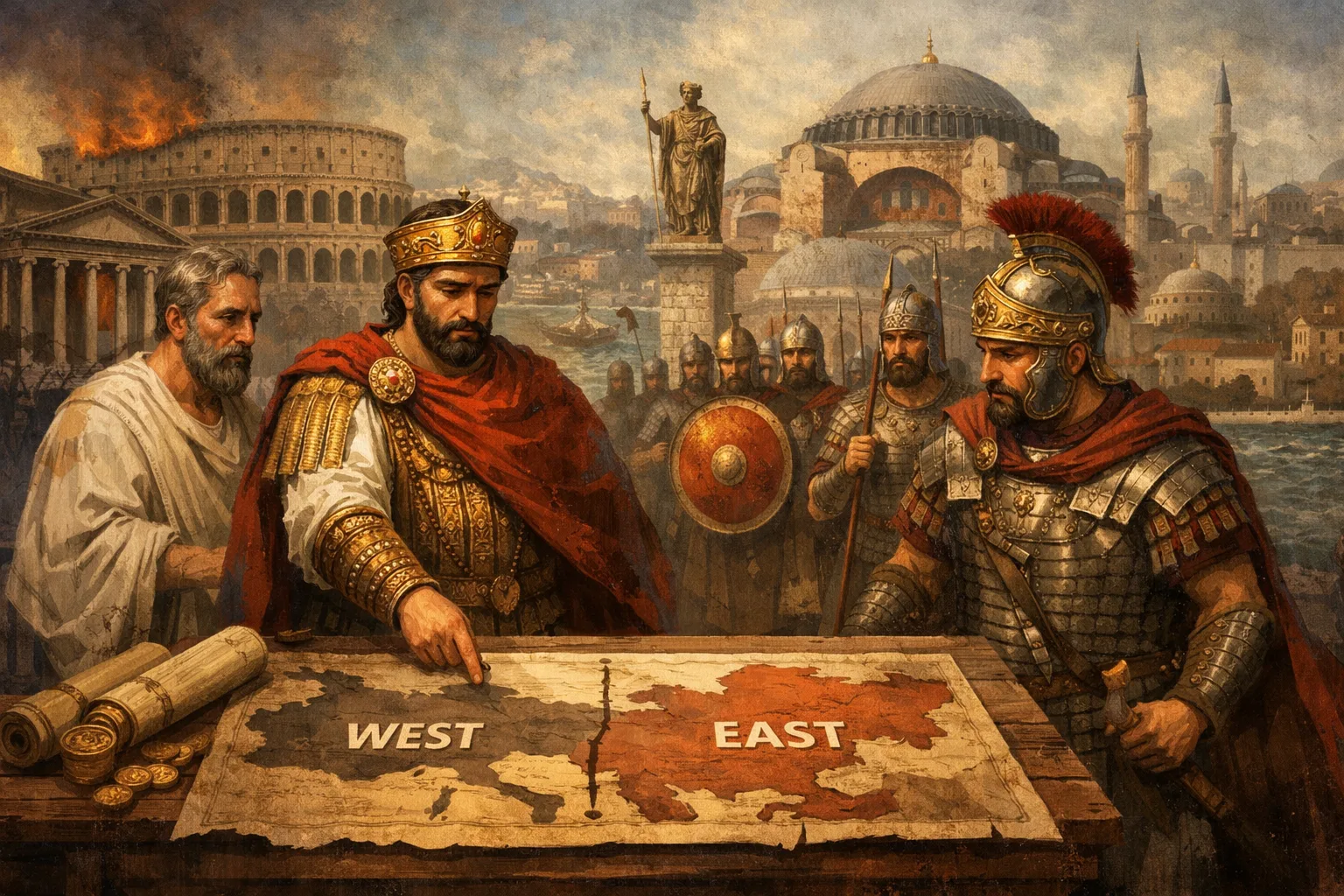
The Eastern Roman state emerged when the Roman Empire was reorganized to manage its vast territories more effectively. In 395 CE, the empire was formally divided, separating the eastern provinces from the western half.

Unlike the West, which collapsed under invasions and internal decay, the East remained stable. Its survival was rooted in strong urban centers, a professional bureaucracy, and access to wealth from Asia, Egypt, and the eastern Mediterranean.

This continuity mattered. The Eastern Roman rulers did not see themselves as a new empire. They believed they were the true continuation of Rome, preserving Roman law, imperial authority, and governance traditions for centuries.

By the time Islam emerged in Arabia, this empire had already ruled uninterrupted for nearly three hundred years, shaping regional politics and power balances across the Near East.
2. Constantinople as an Imperial Capital

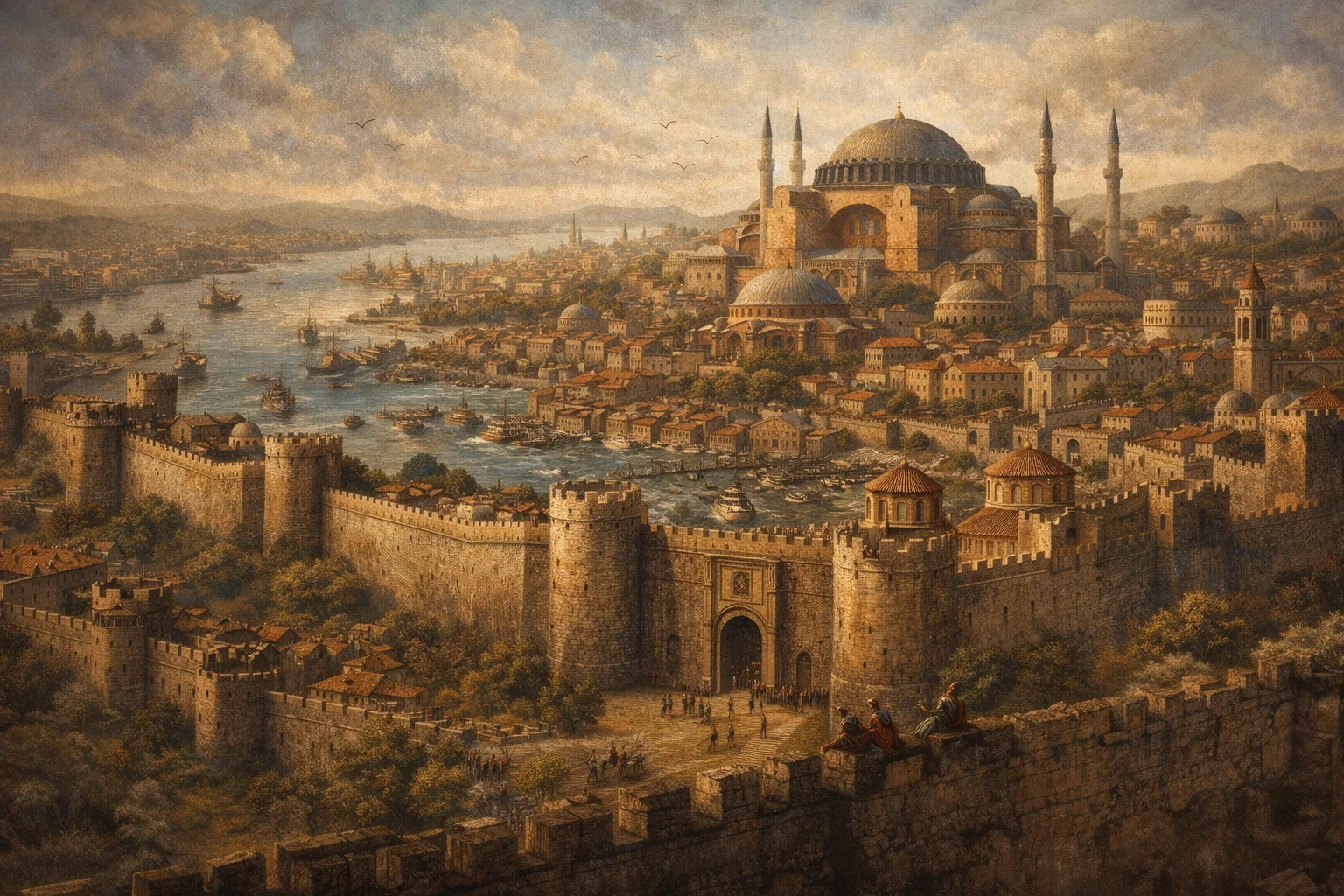
The heart of the empire was Constantinople, a city strategically positioned between Europe and Asia. Its location allowed control over land and sea routes linking the Mediterranean, Black Sea, and Near East.

Protected by massive defensive walls, the city was nearly impossible to conquer for centuries. These fortifications made it a political safe haven during times when other regions faced invasions and instability.

Constantinople was more than a capital. It functioned as an administrative center, a religious hub, and a symbol of imperial continuity. Emperors ruled from here as both political leaders and guardians of Christian order.

Because of this stability, the empire could project power far beyond its borders, influencing neighboring regions long before the rise of Islam.

3. Imperial Government and Administration

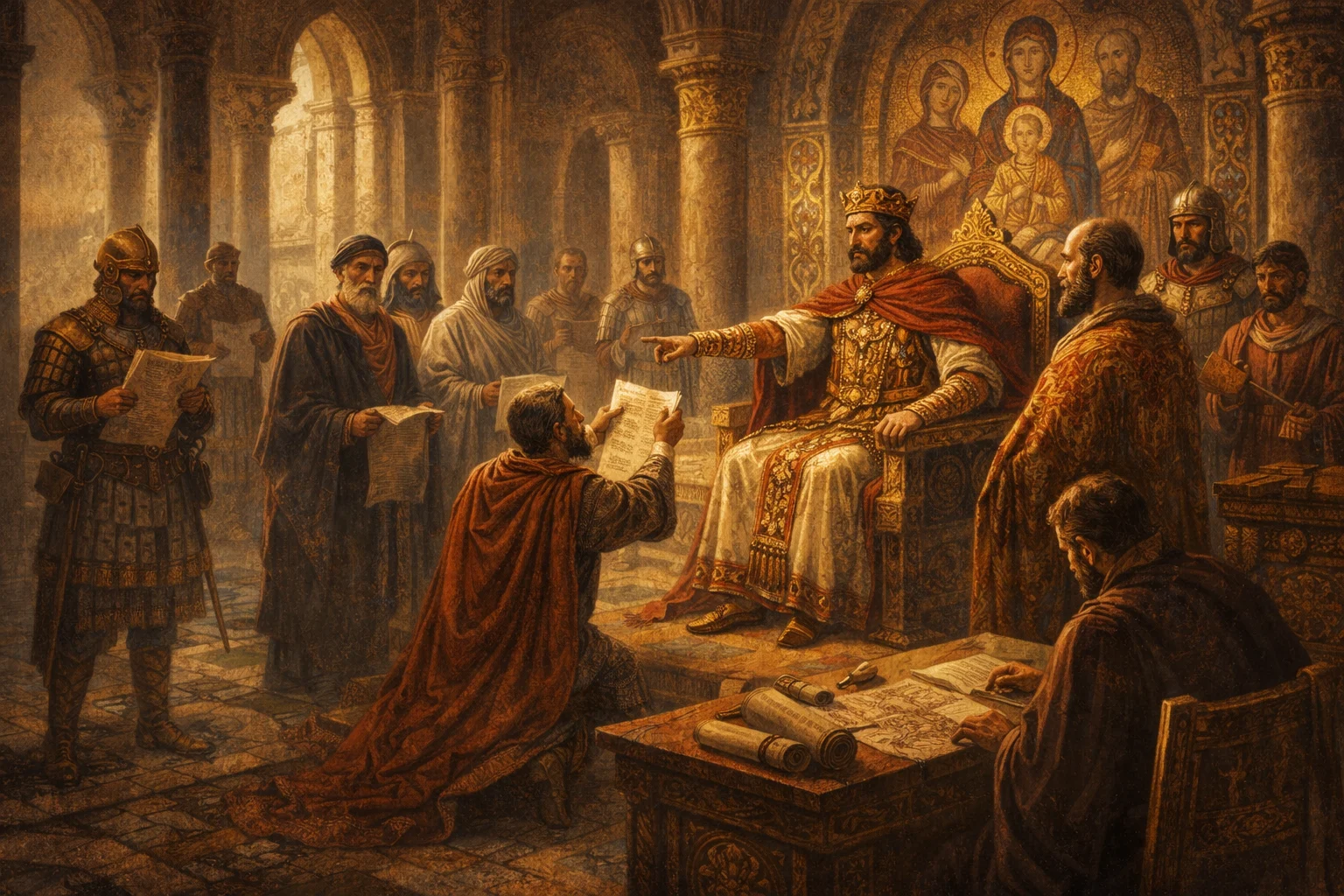
The empire was ruled by an absolute emperor, seen as both a political ruler and a divinely guided authority. His power extended over lawmaking, taxation, military command, and religious oversight.

Government officials were appointed, not elected. This created a centralized administrative system where loyalty to the emperor mattered more than family or tribal ties. Orders flowed directly from the capital to distant provinces.

A key strength of the Byzantine system was Roman law, carefully preserved and enforced. Clear legal codes helped maintain order across diverse populations speaking different languages and following different customs.

Because of this structure, the empire could function efficiently even during long wars. Stability at the center allowed Byzantium to survive crises that would have destroyed less organized states.

4. Christianity as State Religion

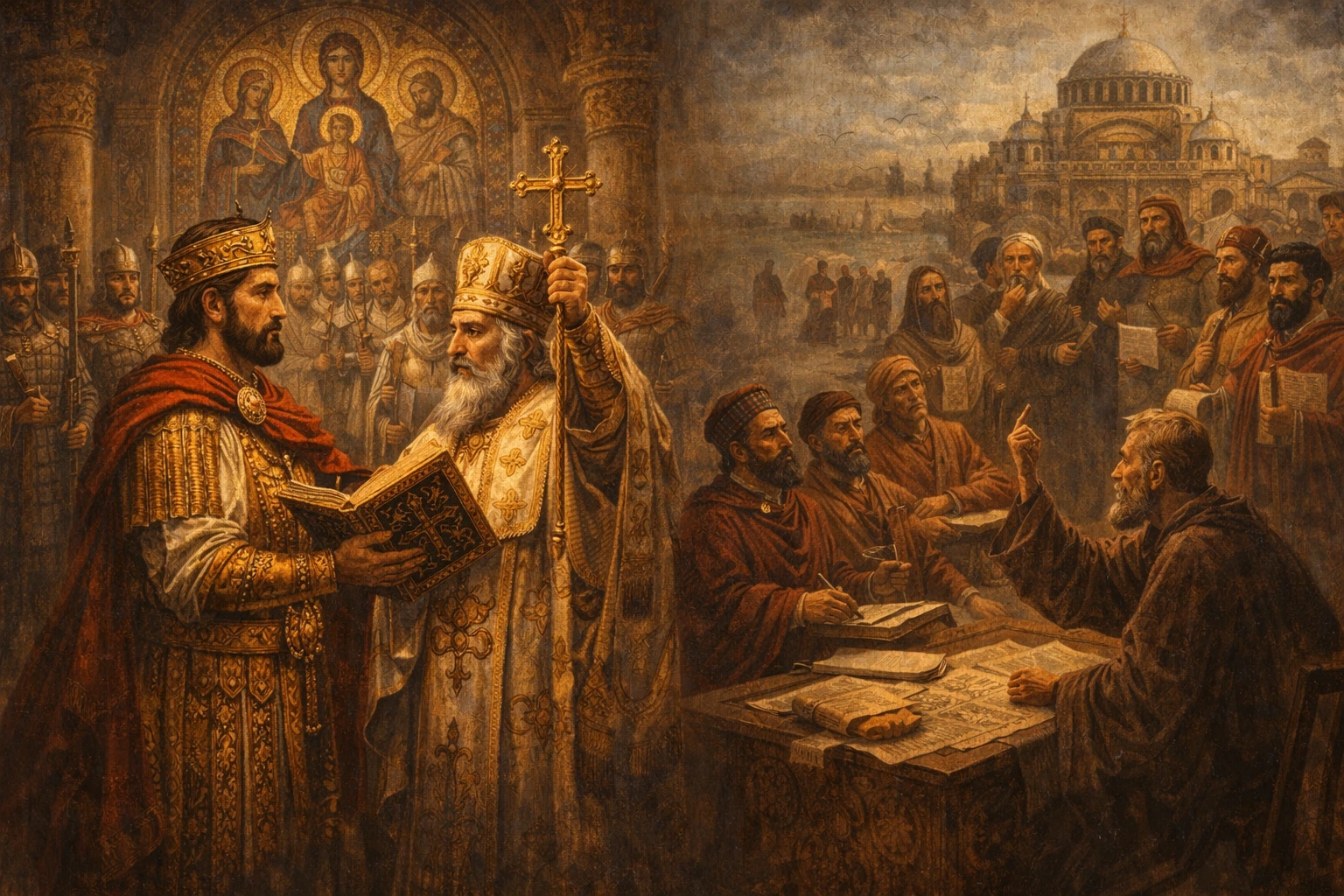
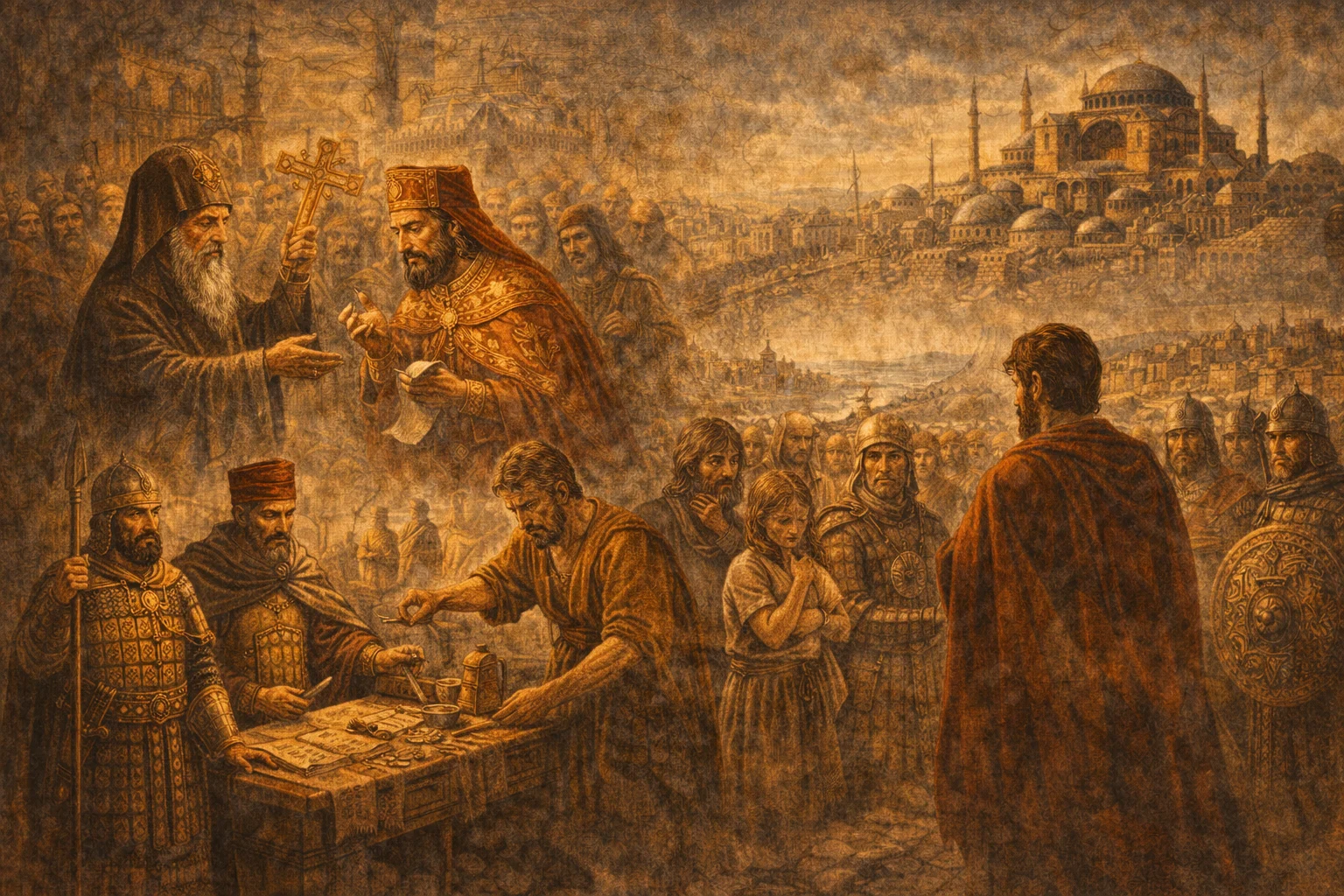
Religion was not separate from politics in the Byzantine world. Christianity shaped law, public life, and imperial authority at every level.

The emperor was seen as the protector of the Church, responsible for defending correct belief and suppressing heresy. This close link meant religious unity was treated as a matter of state security, not just faith.

Church institutions were powerful and organized. Bishops managed cities, monasteries owned land, and religious courts handled many disputes. Over time, theological disagreements caused deep divisions within the empire.

These internal tensions weakened social unity. As the empire faced external wars and exhaustion, religious conflict quietly eroded its strength on the eve of Islam’s emergence.

5. Byzantine–Sassanid Rivalry

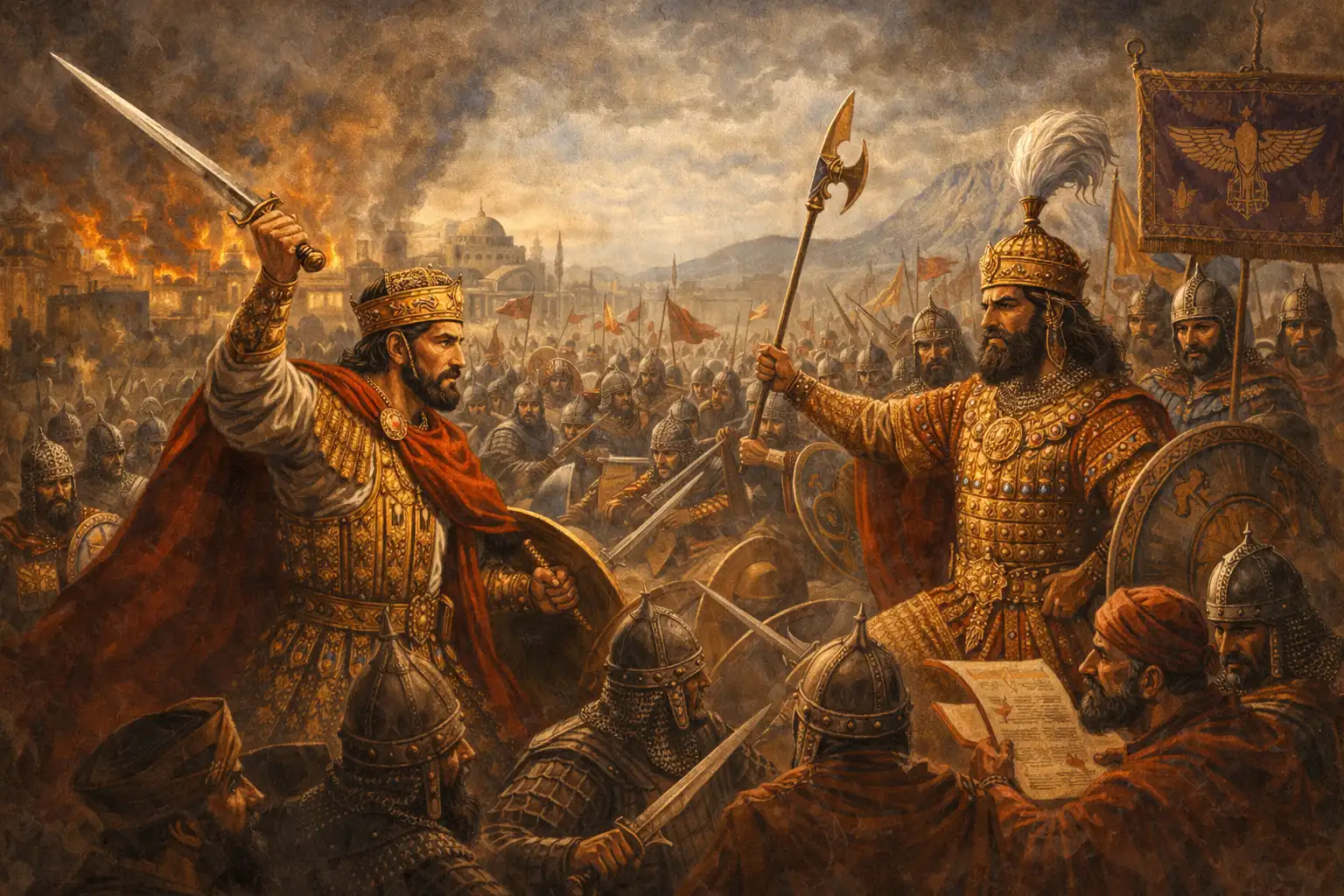
For centuries, the Byzantine Empire was locked in a continuous struggle with the Sassanid Empire. This rivalry dominated the political map of West Asia before Islam.

The wars were not brief clashes. They were long, exhausting campaigns that drained soldiers, wealth, and public morale on both sides. Cities changed hands, borders shifted, and entire regions were left unstable.

Key causes of this rivalry included:

  • Control over Syria, Mesopotamia, and Armenia

  • Religious tension between Christian Byzantium and Zoroastrian Persia

  • Competition for trade routes linking East and West

By the early 7th century, both empires were severely weakened. This mutual exhaustion created a power vacuum that would soon reshape the region in unexpected ways.

6. Territories Under Byzantine Control

Before Islam, the Byzantine Empire ruled over vast and diverse lands stretching across three continents. These territories were not only strategic but also economically and religiously important.

Key regions under Byzantine authority included Syria, Egypt, parts of Anatolia, the Balkans, and coastal areas of the eastern Mediterranean. Many of these lands had ancient cities, fertile agriculture, and established trade networks.

Control was maintained through:

  • Provincial governors appointed from Constantinople

  • Local elites cooperating with imperial administration

  • Military garrisons securing borders and key cities

These regions connected Byzantium directly to Arabia’s northern frontiers. As imperial control weakened due to war and internal strain, these once-stable territories became increasingly exposed to change.

7. Economic Strength and Trade Routes

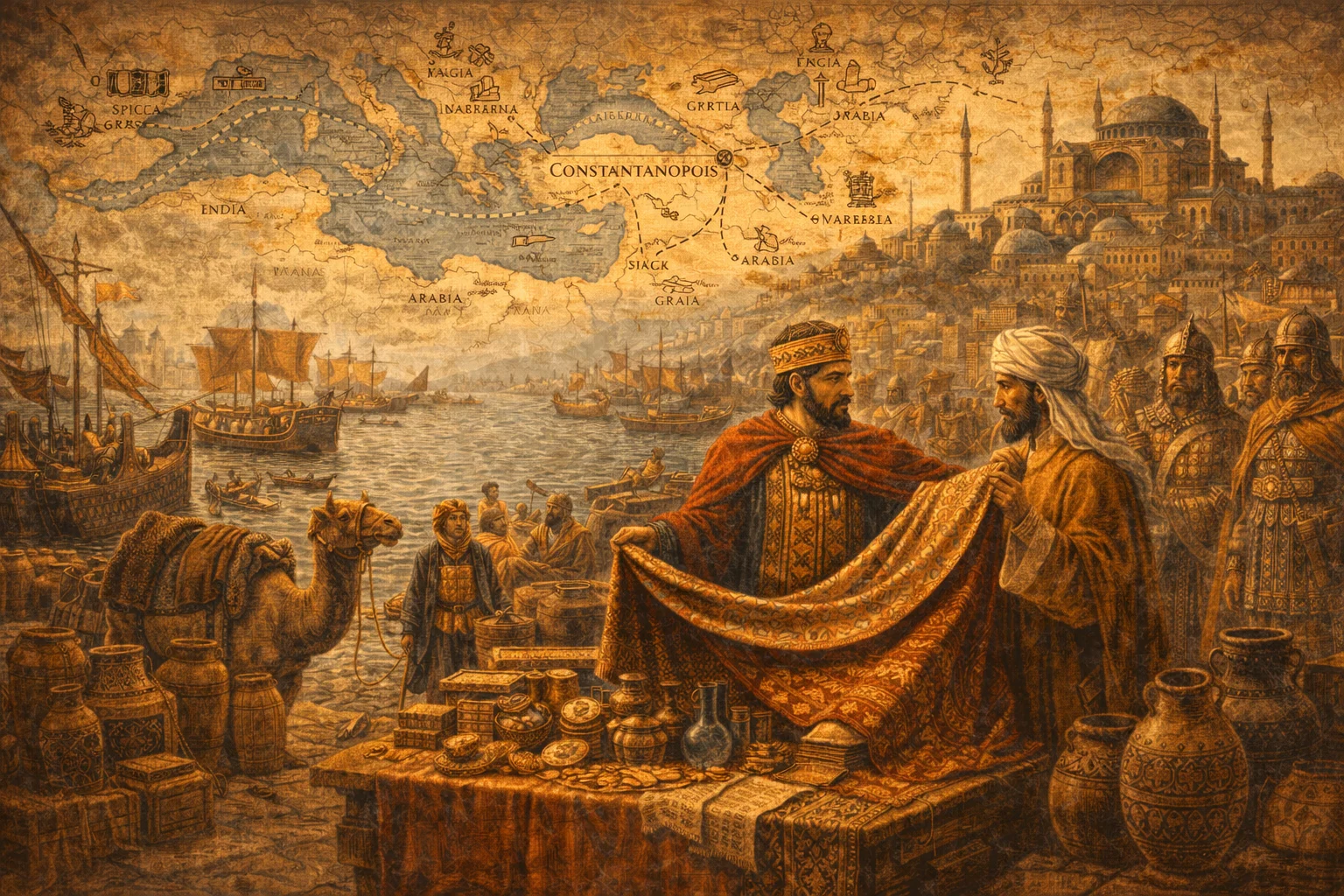
The Byzantine Empire’s power rested heavily on its economic network, which connected East and West through land and sea. Trade moved efficiently across the Mediterranean world, bringing wealth into imperial cities.

Merchants carried silk, spices, grain, olive oil, and textiles through ports and caravan routes. Taxes on trade became a major source of state income, helping fund the army and administration.

Key advantages of the Byzantine economy included:

  • Control of major sea lanes and harbors

  • State supervision of currency and prices

  • A stable gold coin that was trusted internationally

Because trade routes passed close to Arabia, economic shifts in Byzantine lands affected surrounding regions. When wars disrupted commerce, markets weakened, and imperial influence slowly declined.

8. Military Structure and Defense Strategy

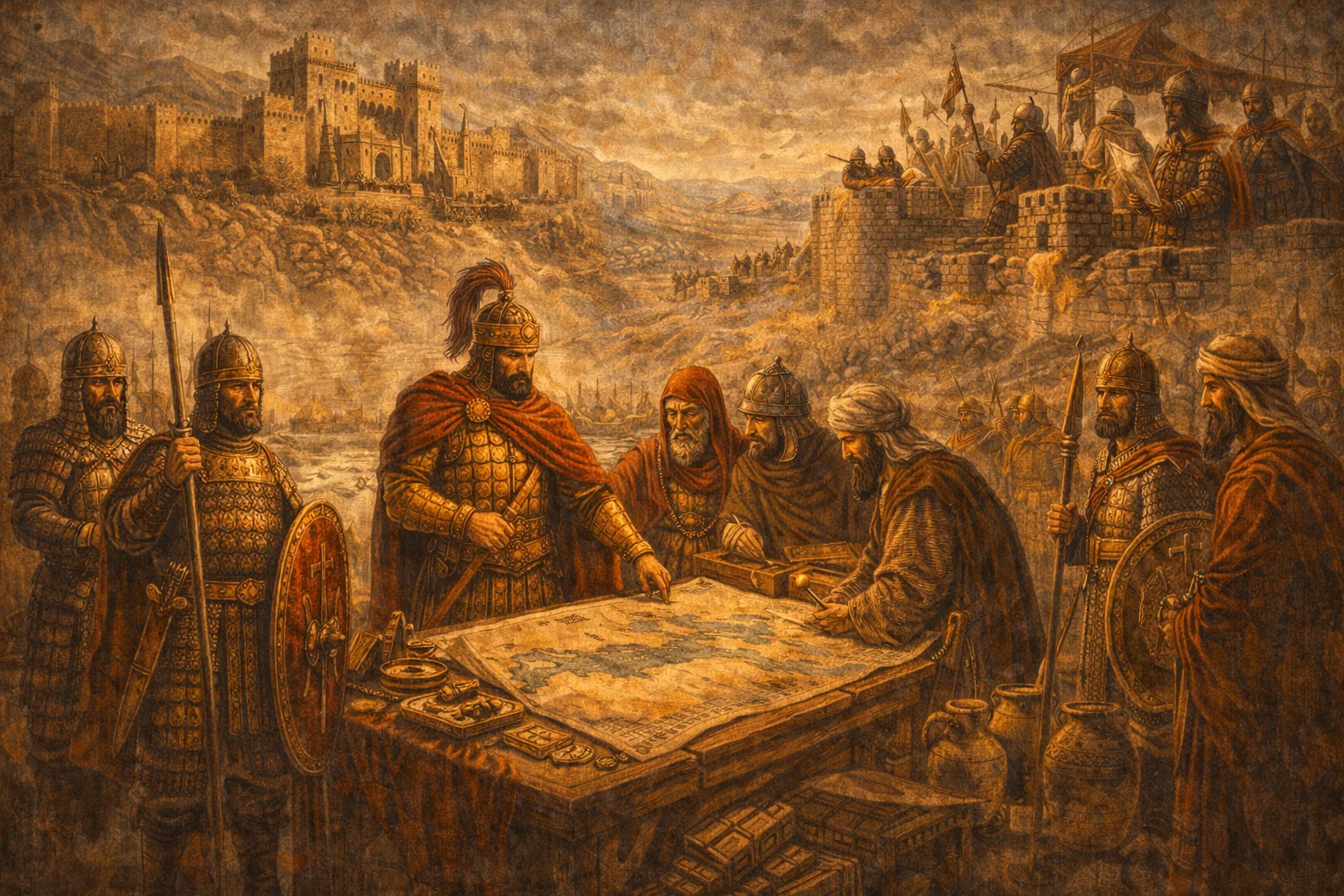
The Byzantine Empire maintained a highly organized military system designed for long-term defense rather than constant expansion. Survival, not conquest, shaped its strategy.

Soldiers were divided between professional field armies and local provincial forces. This allowed rapid response to invasions while keeping order in distant regions.

Instead of relying only on open battles, Byzantium focused on:

  • Fortified cities and border defenses

  • Strategic retreats to exhaust enemies

  • Diplomacy, treaties, and controlled tribute when needed

This layered approach helped the empire withstand repeated attacks for centuries. However, continuous wars before Islam stretched military resources thin, leaving defenses weakened in several frontier regions.

9. Internal Challenges Before Islam

By the early 7th century, the Byzantine Empire was powerful on paper but strained from within. Decades of warfare, high taxation, and population loss weakened everyday life across many provinces.

Social divisions deepened as ordinary people struggled under economic pressure. In several regions, local populations felt disconnected from imperial authority centered in Constantinople.

Key internal challenges included:

  • Religious disputes that divided communities and churches

  • Heavy taxes to fund wars and defenses

  • Declining loyalty in distant provinces

These internal weaknesses reduced the empire’s ability to respond quickly to new realities. When Islam emerged in Arabia, the Byzantine world was already tired, fragmented, and vulnerable, despite its long imperial history.